VocalsNovember 17, 20262 min read
Pitch correction: natural polish or the robot
One control decides whether nobody notices or everybody does. How speed, key and scale shape the sound.

Pitch correction listens to the note you sing and moves it to the nearest note that belongs to the song. The same tool can be invisible or the loudest effect on the record. What changes is how fast, and toward which notes.
Speed is the whole sound
With a slow correction, the natural slides between notes survive and the voice is only nudged toward the center. Listeners hear a confident singer, not an effect.
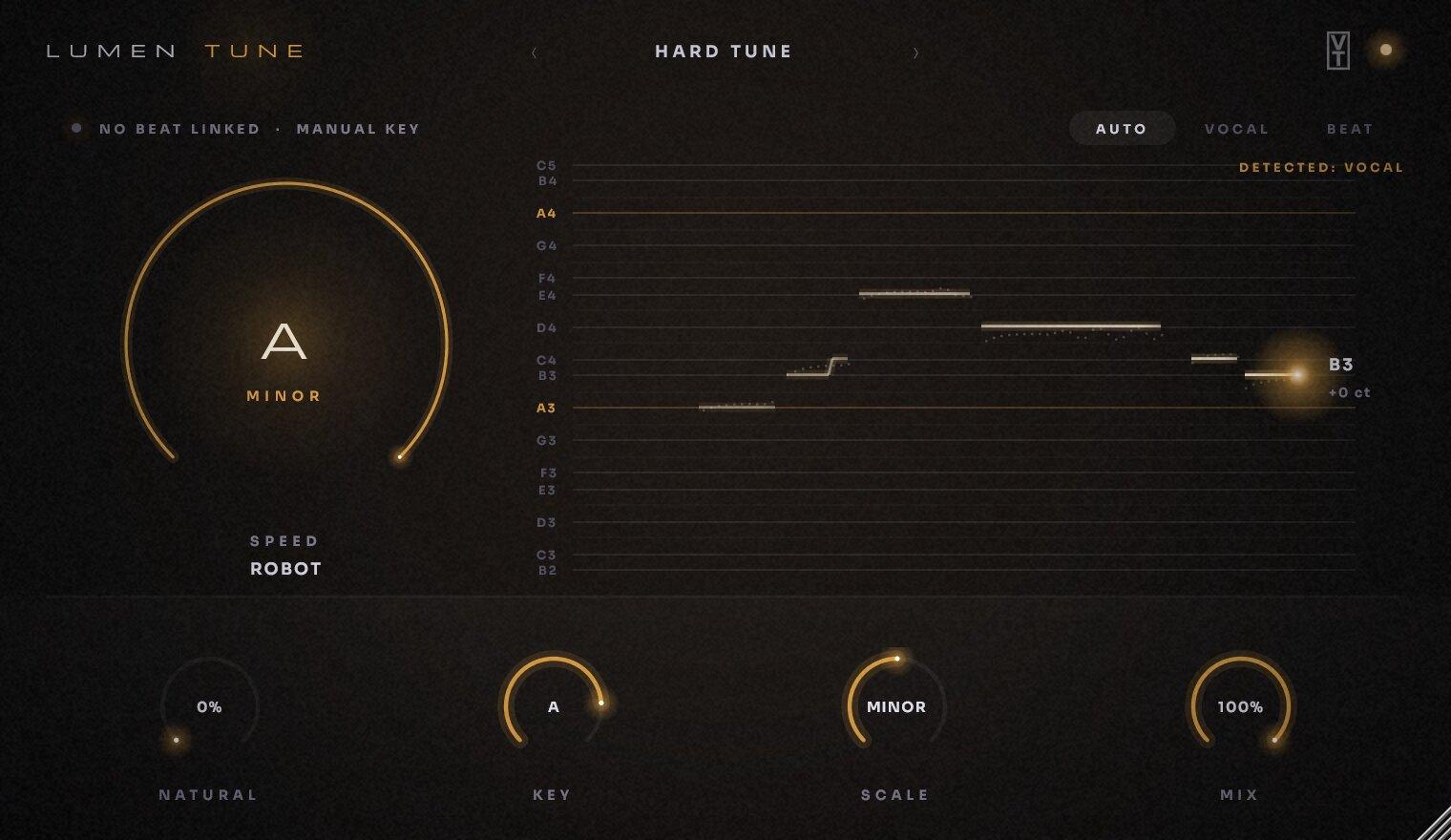
Turn the speed all the way up and every note snaps instantly to the target. The slides vanish, the voice jumps from step to step, and you get the hard-tune sound that runs through so much rap, trap and pop.
The key and scale decide the targets
The corrector can only pull you toward the right notes if it knows which notes are right. Set the wrong key and it will drag a perfectly good note to a wrong one. That's the most common reason pitch correction sounds off.
- Find the key of the beat before you start.
- Natural sound: slower speed, correct key, let the slides breathe.
- Hard-tune: fastest speed, tight scale, sing into the effect.
Let the beat tell you the key
Lumen Tune can listen to the beat and detect its key and scale for you, so the targets are right from the start. Then one speed control takes you from a light touch to the full robot.