ProductionNovember 17, 20262 min read
Reverse risers: how to pull the beat into your verse
The swell that ends right on your first word. How it's made by hand, why it takes so long, and the fast way.

A reverse riser is the ghostly swell you hear right before a vocal comes in. It's your own first word, played backwards through a reverb, so the sound grows out of nothing and snaps into the real voice. Done right, it pulls the listener into the verse.
The classic way, by hand
- Copy the first word or phrase of the vocal to a new track.
- Reverse it.
- Put a big reverb on it, fully wet, and render the tail.
- Reverse the rendered audio again, so the tail now swells upward.
- Line it up so the swell ends exactly where the real word starts.
The last step is where the time goes. A few milliseconds early and the swell collapses before the word. Late, and it smears into the vocal. Then you change the reverb or the length and do it all again.
Length is a musical choice
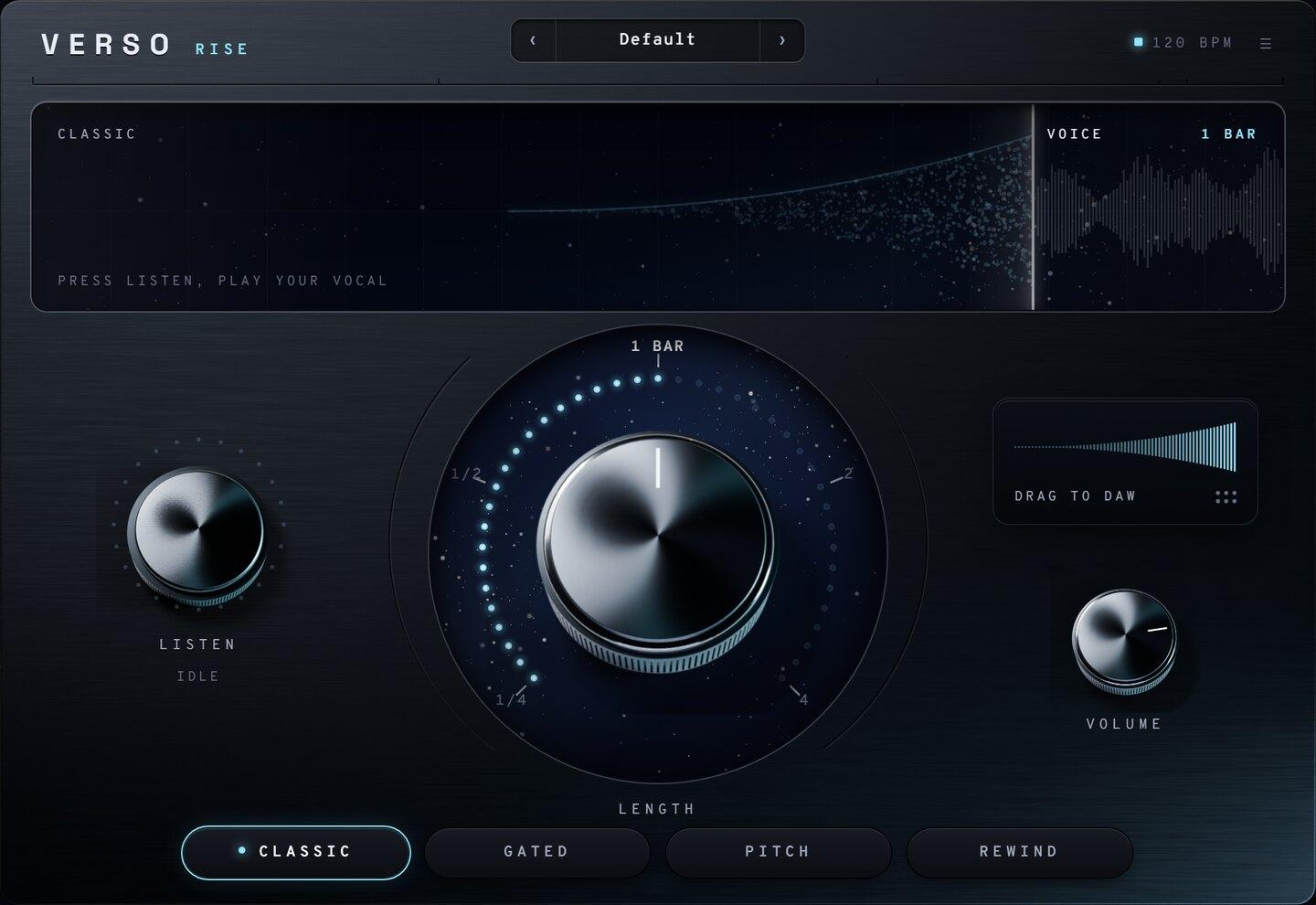
A half-bar swell feels like a quick breath in. Two or four bars become a build of their own. Matching the length to the tempo and the bar is what makes it sound intentional instead of pasted on.
Variations that keep it fresh
Chop the swell into a rhythm and it turns into a gated build that locks to the drums. Pitch it and it becomes a lift. Use the same move on every section and it gets old fast, so it helps to have a few shapes ready.
The fast way
Verso Rise does the whole chain for you. Press Listen and play the vocal: it finds the first word, builds the reverse riser in time with your BPM and ends it exactly where your voice comes in. Choose Classic, Gated, Pitch or Rewind, set the length, and drag the WAV into your session.